|
Day 7: The Beyond (1981, d. Lucio Fulci  In this, the second of Lucio Fulci’s Gates of Hell trilogy, a lynch mob drags artist Schweik from Room 36 of the Seven Doors Hotel, where he is at work on a painting. The mob accuses him of black magic and executes him. What they do not know is that Schweik protects our world from one of the seven Gates of Hell; if opened, it will cause the world to end. Decades later, Liza Merril inherits the Seven Doors Hotel and moves from New York City to oversee its refurbishment. There a plumber is attacked by a ghoul and inadvertently openes the gate to hell. It is easy to dismiss Fulci’s work. Much of it is incredibly slow and almost comically overwrought, with the story itself little more than an excuse for its terrifying set pieces. And yet, the surreal informs almost every scene, from the arresting scene where Liza meets the blind seer Emily on the Lake Pontchartrain Causeway to the final, chilling scene. Catriona McColl plays Liza here, and appears in each entry in the trilogy. For Further Reading: “Less Than Zombie” by Douglas E. Winter  First published in the landmark Splatterpunk anthology Book of the Dead edited by John Skipp and Craig Spector, Winter’s compelling short story uses as his template Bret Easton Ellis’s Less Than Zero to examine disaffected protagonists living a barren existence in Los Angeles, adding the living dead of George Romero’s Dead trilogy to further his metaphors. The result is an intriguing mix of literary satire and social commentary.
0 Comments
Days 4-6: X/Pearl/Maxxxine (2022-2024, d. Ti West) There are many reasons to praise Ti West’s X trilogy, beginning with Mia Goth. As both Pearl and Maxine Minx, she shines as (in the case of the former) a deeply troubled woman who wants nothing more than to leave her mundane existence on her parents’ farm and (in the case of the latter) a young woman who dreams of a stardom outside of the adult and horror film industry. The trilogy begins with X (2022). Set in 1979, a group of filmmakers set out to film an adult feature at the farm owned by the elderly Howard and his wife Pearl, who investigates the guest cabin to discover what they are filming. This ignites her jealousy of their youth and sexuality, and begins a rampage. West shoots the picture as a 1970s slasher, incorporating elements of Psycho (1960), The Texas Chainsaw Massacre (1974), and The Shining (1980) along with echoes of Deep Throat (1972) and Debbie Does Dallas (1978). The score by Tyler Bates and Chelsea Wolfe adds to West’s well-composed love letter to exploitation cinema. Written by West and Goth, Pearl (2022) explores the eponymous character’s life on her parents’ farm in 1918 while her husband joins other American soldiers in Europe. Dreaming of a life outside of her day-to-day existence, she finds herself constricted by her mother’s strict expectations and desires a life of national fame. She meets a moviehouse projectionist who tells her she could be a star, and her mother observes her emerging psychotic behavior. West jettisons the grindhouse values in X for something rich in Technicolor hues and complex psychological examination, with Goth bringing incredible humanity to a woman slipping into madness. The closing credits shot is one of the most chilling in a modern horror movie. Maxxxine (2024), the weakest entry, finds Maxine Minx, six years older, landing a role in a horror movie, but potential fame comes with run-ins with a sleazy private detective who may know about her involvement in the events of the first feature, as well as a gloved killer who murders her friends, with Maxine herself in his sights. The third effort is an effort too many, with its giallo-inspired writing and cinematography not up to the task of successfully closing the examination of fame and madness the series turned out to be. All three star Goth, who shines. For Further Reading: The Indian Lake Trilogy (My Heart Is a Chainsaw, Don’t Fear the Reaper, The Angel of Indian Lake) by Stephen Graham Jones Practically a dissertation on slasher cinema in novel form. Jade Daniels is a high school student obsessed with 1980s slasher movies. She lives in the lake town of Proofrock, Idaho, where a campsite hosted a massacre fifty years ago. As the town plans to build a suburb, Jade realizes she may be in her very own slasher movie. Stephen Graham Jones practically cornered the market on the slasher story in prose fiction; this three-volume tale of trauma and the rite of passage into adulthood is the subgenre’s magnum opus.
Day 3: Near Dark (1987)  Oklahoma. One night small-town kid Caleb (Adrian Pasdar), meets drifter Mae (Jenny Wright), who bites him as he tries to make out with her and runs away. When his flesh begins to burn with the rising sun, she arrives with a family of vampires who take him away in an RV. Leader Jesse (Lance Henriksen) allows Caleb to travel with them but tells Caleb he must hunt and feed, but Caleb is unwilling. Meanwhile, Caleb’s father searches for him, inadvertently endangering Caleb’s sister. Director Kathryn Bigelow had wanted to make a Western, but she and Eric Red (who co-wrote the screenplay) added vampires when funding became difficult to obtain. Released in October 1987, it was overshadowed by the surfeit of vampire pictures of the period (including Fright Night, Lifeforce, Once Bitten, Vamp, and, released earlier that summer, The Lost Boys), and underperformed at the box office. Yet it found an audience on home video, with the bar scene becoming a classic set piece.  For Further Reading: Less Than Human by Gary Raisor
Drifter vampires Steven and Earl arrive in a small Texas town, where they hustle pool and menace the residents until a bar fight ignites a war between vampires and humans, ultimately making the town’s streets run red with blood. Intense, gruesome, and literate, it deserves a place among such vampire novels as King’s Salem’s Lot, Lindqvist’s Let Me In, and Rosson’s Coffin Moon. I was hoping to begin a 31 Days of Horror series to keep this page alive, and as with everyone existing in the hellscape that is 2026, life happened. So today you’ll get two movie selections, though both are part of the same story. For this series I also will include accompanying reading material. Days 1 and 2: It Chapters One (2017) and Two (2019) Small confession: Though it ran when I was in my twenties, I have never seen the television miniseries starring Tim Curry as Pennywise. This has less to do with its quality than my own inertia. I’m sure I’ll get around to a viewing. That said, It Chapter One is a groundbreaking adaptation of the first half of Stephen King’s mammoth kitchen-sink novel, one of the genuine touchstones of modern horror despite some…let’s call it problematic material. You know the story: the town of Derry, Maine faces the torments of a creature every twenty-seven years, this time taking the form Pennywise the Clown. A group of outcast children who call themselves the Losers’ Club confronts their own fears as they attempt to stop it. Bill Skarsgård stars as Pennywise, an automatic standout, as is the young cast. Andy Muschietti directs with a good eye for how kids behave and delivers some incredible set pieces (the death of Georgie is worth the price of admission alone), and screenwriters Chase Palmer, Cary Joji Fukunaga, and Gary Dauberman manage to reign in the sprawling story by maintaining the focus on the Losers’ Club as children. They also set their adaptation in the 1980s, presumably the same publishing year as the novel, which allows the picture to tie in to the nostalgia that drew audiences to Stranger Things. It Chapter Two is a more middling affair. Despite a strong cast (which includes stars James McAvoy, Jessica Chastain, Bill Hader, and Isaiah Mustafa) and a few good scares (especially the scene where Beverly, played by Chastain, visits her old family home and is attached by Mrs. Kersh), it lacks the energy of the first, and the adult Losers are drawn too broadly. Even still, there are small pleasures, as when Bill Denbrough (McAvoy) purchases his old child bicycle from an antique shop where the owner (played by King) dismissively tells him he didn’t like the ending of his latest book.
Days 1 and 2: It Chapters One (2017) and Two (2019) Small confession: Though it ran when I was in my twenties, I have never seen the television miniseries starring Tim Curry as Pennywise. This has less to do with its quality than my own inertia. I’m sure I’ll get around to a viewing. That said, It Chapter One is a groundbreaking adaptation of the first half of Stephen King’s mammoth kitchen-sink novel, one of the genuine touchstones of modern horror despite some…let’s call it problematic material. You know the story: the town of Derry, Maine faces the torments of a creature every twenty-seven years, this time taking the form Pennywise the Clown. A group of outcast children who call themselves the Losers’ Club confronts their own fears as they attempt to stop it. Bill Skarsgård stars as Pennywise, an automatic standout, as is the young cast. Andy Muschietti directs with a good eye for how kids behave and delivers some incredible set pieces (the death of Georgie is worth the price of admission alone), and screenwriters Chase Palmer, Cary Joji Fukunaga, and Gary Dauberman manage to reign in the sprawling story by maintaining the focus on the Losers’ Club as children. They also set their adaptation in the 1980s, presumably the same publishing year as the novel, which allows the picture to tie in to the nostalgia that drew audiences to Stranger Things. It Chapter Two is a more middling affair. Despite a strong cast (which includes stars James McAvoy, Jessica Chastain, Bill Hader, and Isaiah Mustafa) and a few good scares (especially the scene where Beverly, played by Chastain, visits her old family home and is attached by Mrs. Kersh), it lacks the energy of the first, and the adult Losers are drawn too broadly. Even still, there are small pleasures, as when Bill Denbrough (McAvoy) purchases his old child bicycle from an antique shop where the owner (played by King) dismissively tells him he didn’t like the ending of his latest book.  For Further Reading: Boy’s Life by Robert R. McCammon and Of Foster Homes and Flies by Chad Lutzke
McCammon’s novel, while not exactly horror, remains the gold standard of the coming-of-age tale, while Chad Lutzke’s novella identifies the harrowing tragedies of growing up.
“Twilight Zone”, Golden Earring “Time Warp”, The Rocky Horror Picture Show, Richard O’Brien “Heroes”, David Bowie “Bittersweet Symphony”, The Verve “Der Kommissar”, After the Fire “Let’s Go Crazy”, Prince and the Revolution “Burning Down the House”, Talking Heads “Steppin’ Out”, Joe Jackson “Blue”, Mai Yamane “Bang A Gong (Get It On)”, T. Rex
A warning to the curious: ArmadilloCon 2026 has released its programming schedule. Taking place on September 11-13, it includes a writer's workshop and abundance of programming . My schedule (five panel discussions and one reading) is below. Hope to see you there. Friday, September 11, 2026 We Keep Rediscovering Low Budget Horror 9pm - 9:55pm Derek Austin Johnson (moderator), Usman T. Malik, Mariana Colín, Micaiah Johnson, Johnny Compton Low budget horror movies have always existed, and its the genre that lends itself best to creative storytelling and filmcraft choices driven by having little money. This has been the case since the beginning of film as a medium. But every few years we get a surge of New Horror Movies (this year with Obsession and Backrooms) that costed nothing but do big business, and the media responds like this is something new and unexpected. Saturday, September 12, 2026 What You Should Have Watched This Year 11:30am - 12:25pm A. T. Campbell, III (moderator), Aaron de Orive, Jeremy Brett, Derek Austin Johnson, Robin Alvarez So many genre movies and shows! Which are worth talking about? Our panelists have opinions. Liminal Spaces in Horror 1pm - 1:55pm Randee Dawn (moderator), Aaron de Orive, Usman T. Malik, Derek Austin Johnson, Johnny Compton From The Shining to Silent Hill to Exit 8 and the Backrooms, the transitional and impersonal space has always held fascination for horror in print and film, to name only two. This panel discussion tries to discuss why the trend for liminal horror has become so prevalent and why it speaks to modern horror audiences. Reading - Derek Austin Johnson 3pm - 3:25pm Derek Austin Johnson Reading - Derek Austin Johnson Psychological Horror: It's All in the Mind 8pm - 8:55pm K.D. Blade (moderator), Usman T. Malik, Tonia Ransom, Derek Austin Johnson, Johnny Compton The panel considers the difference between the supernatural and psychological horror, and if horror might *all* be psychological. Stephen King's Parks and Rec: A Trip to Widow's Bay 9pm - 9:55pm Beth Anderson / A.E. Dethlefsen (moderator), Aaron de Orive, A. Lee Martinez, Marshall Ryan Maresca, Derek Austin Johnson, Mariana Colín This panel discusses Apple TV's horror comedy gem, from its unusual premise (imagine Parks and Recreation set in the Stephen King universe) to how it approaches standard horror tropes.  ArmadilloCon 2026 I’ll be at NecronomiCon Providence this August.  NecronomiCon Providence 2026 The schedule has not been posted yet. However, I can confirm I’ll be on the following panels:
This was nice to wake up to. Inkd Publishing has nominated my story "Day of the Devilfish for the Pushcart Prize. The story is my attempt to answer the question of what John Steinbeck's fiction would have looked like if it had been published by Weird Tales. The book also includes stories by Rachel Roth, Armand Rosamilia, A. M. Sutter, Ross Baxter, and Kelli Dianne Rule, among many others. You can pick up physical copies here, here, and here.
Out now. My story "Day of the Devilfish" is in Cthulhu Dreams edited by A. Balsamo and released by Inkd Publishing. It is my attempt to answer the question of what John Steinbeck's fiction would have looked like if it had been published by Weird Tales. The book also includes stories by Rachel Roth, Armand Rosamilia, A. M. Sutter, Ross Baxter, and Kelli Dianne Rule, among many others. You can pick up physical copies here, here, and here.  Out now. My story “Jellies” is in the latest issue of Midnight Tales, along with stories by Terry Alexander, Maxwell Shepherd, John Monsees, Stetson Ray, and others, with gorgeous art by Allen Koszowski, Gerrod General, and Steve Bejma. You can pick up your copy here.  |
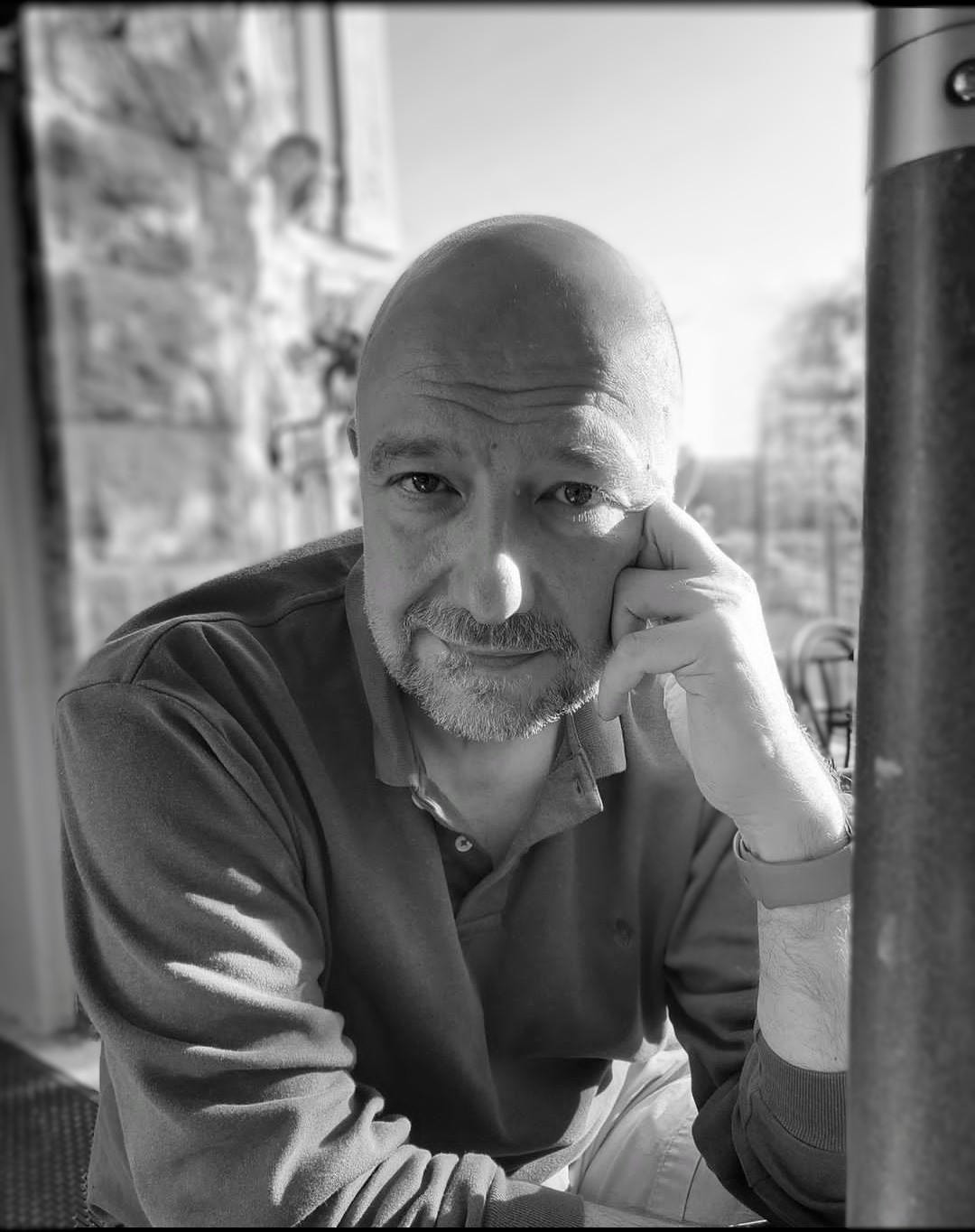
Derek Austin Johnson has lived most of his life in the Lone Star State. His work has appeared in Chthonic Matter Quarterly, Cthulhu Dreams, the Splatterpunk Award-winning Camp Slasher Lake Vol. 1, and Generation X-ed. His novel The Faith was published in 2024.
He lives in Central Texas. Archives
October 2026
Categories |


 RSS Feed